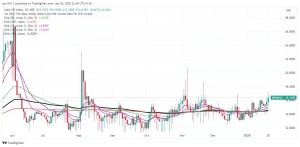
Trading Around Quarter-End Rebalancing
Four times a year, some of the largest investors in the world have to move money at roughly the same time. Pension funds, balanced funds and asset managers bring their portfolios back to target weights, and banks tidy up their balance sheets before reporting. The result is a burst of flows that has nothing to do with the economic outlook and everything to do with the calendar.
Trading around quarter-end rebalancing means understanding where those flows come from, when they tend to hit and how they can push price around in ways your normal analysis won’t explain.
What Quarter-End Rebalancing Is
Many large investors run fixed allocations, such as 60 percent equities and 40 percent bonds. Over a quarter, markets move those weights out of line. If stocks rally and bonds fall, the portfolio ends up overweight equities, so the fund sells stocks and buys bonds to get back to target.
The same logic applies across currencies. A fund holding foreign shares often hedges some or all of the currency exposure. When the value of those shares changes, the hedge has to be resized, which means buying or selling currency at the end of the month or quarter.
Because so many funds follow similar rules and similar deadlines, these trades tend to bunch together in the last days of the period.
Why It Moves Currency Markets
The clearest evidence comes from the London 4pm fix, the benchmark exchange rate set in a short window around 4pm London time and used by index providers and fund managers around the world. Many rebalancing and hedging orders are executed at the fix so that they match the benchmark rate.
Research by Michael Melvin and John Prins found that when equity markets rise over a month, the currency tends to weaken ahead of the end-of-month fix, consistent with hedgers selling currency as their foreign equity holdings grow. Other studies have found that price moves in the minutes before the fix are noticeably larger on the last trading day of the month than on other days.
Quarter-end adds another layer. Some banks shrink parts of their balance sheets ahead of reporting dates, which can reduce liquidity in funding markets and spill over into currency trading.
The General Rule of Thumb
Analysts often use a simple starting point. If a country’s stock market has strongly outperformed during the quarter, foreign investors who hedge their holdings may need to sell that currency into the fix. If it has underperformed, they may need to buy it back.
Treat that as a starting point, not a signal. Bond performance, existing positioning and corporate flows can all point in different directions. Banks publish rebalancing estimates before most month-ends and they regularly disagree. Sometimes the expected flow is already priced in by the time the fix arrives.
When the Flows Tend to Hit
Rebalancing doesn’t all happen in one minute. Some funds spread their trades over the final week or two of the quarter to avoid moving the market against themselves. Others execute on the last trading day, many of them at the 4pm fix.
Watch for three windows: the final week of the quarter, the last trading day, and the period leading into 4pm London time on that day. Price action around the fix can be sharp and then reverse once the orders are filled.
It also helps to know which quarter-ends carry extra weight. Year-end in December and the end of March, when Japan’s financial year closes, often bring larger adjustments than the June and September quarters.
Risks for Prop Traders
Quarter-end flows are mechanical, not driven by news, which means technical levels can be ignored. Price can push through support or resistance on rebalancing orders and then snap back once the fix passes.
Spreads can also widen around the fix as liquidity providers manage large one-sided orders. For a prop account, that combination of sudden moves and wider spreads can turn a normal stop into a bigger loss.
At TTT Markets, the daily loss limit and the maximum loss are both measured against real-time equity, including floating profit and loss, commissions and swap. A position caught on the wrong side of a fix move counts against those limits while it’s still open.
How to Trade Around Quarter-End
Mark the dates. Put the last trading day of each quarter and the 4pm London fix in your calendar, and treat them like a scheduled news event.
Reduce size into the fix. If you’re holding a position into 4pm on the last day of the quarter, consider trimming it or widening your stop and cutting lots so the money at risk stays the same.
Don’t chase fix moves. A sharp move in the minutes before 4pm is often order flow rather than a new trend. Waiting until after the fix to see whether the move holds can save you from buying the top of a temporary spike.
Mind the minimum hold time. Trying to scalp the fix itself is risky for another reason. TTT Markets has a two-minute minimum hold on trades, so a quick in-and-out trade around the fix window can break the rules as well as your stop.
Check the estimates, then wait. Read the rebalancing previews if you have access to them, but let price confirm the direction before acting. If the flows and the forecasts disagree, stay out.
Conclusion – Trading Around Quarter-End Rebalancing
Quarter-end rebalancing creates predictable timing but unpredictable direction. Funds and hedgers move large amounts of money into the final days of the quarter, often at the London 4pm fix, and that can push price through levels that would normally hold. Mark the dates, size down into the fix, avoid chasing order-driven spikes and remember that on a TTT Markets account any loss counts against your equity-based limits while the trade is still open.
FAQ – Trading Around Quarter-End Rebalancing
1. What is the London 4pm fix?
It’s a benchmark exchange rate calculated from trades in a short window around 4pm London time. Index providers and fund managers use it to value portfolios, so many rebalancing and hedging orders are executed at that rate.
2. Do quarter-end flows always move the market in the expected direction?
No. Bank estimates often disagree, and the expected flow can be priced in early. Use rebalancing forecasts as context and let price action confirm the direction.
3. Can I trade the month-end fix on a TTT Markets account?
Yes, as long as the trade follows the rules, including the two-minute minimum hold. Any losses from sharp moves or wider spreads around the fix count against your daily loss limit and maximum loss.
We have helped thousands of traders reach funding at TTT Markets from account sizes of $5k upwards to $500k. Check out our programs.
Additional resources:
Equity Hedging and Exchange Rates at the London 4pm Fix (Melvin and Prins)
Is London End of Day Still Key for APAC FX Traders? (LSEG FTSE Russell)

 support@tttmarkets.com
 WhatsApp Support →