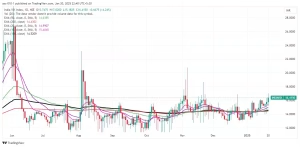
Why Traders Struggle in the Summer Months
Plenty of traders notice the same pattern every year. A strategy that worked well through spring starts to stall in July, and by August the account is going sideways or backwards. It’s tempting to blame yourself, but a lot of the problem is the market itself.
This article explains why traders struggle in the summer months, what changes in the market between June and August, and how to adjust so a slow season doesn’t undo the work you put in earlier in the year.
Volume Drops When Desks Go on Holiday
Summer is peak holiday season across Europe and North America. Bank traders, fund managers and corporate treasury teams take time off, and many desks run with fewer people. Fewer participants means less volume, and less volume changes how price behaves.
August is usually the quietest stretch. Europe in particular slows down, which matters because London is the biggest forex trading centre. When London is quiet, the most liquid hours of the day lose some of their usual energy.
Ranges Shrink and Breakouts Fail
With fewer large orders coming in, price often drifts in tight ranges. Moves that would normally follow through run out of steam because there isn’t enough fresh money to push them further.
That’s hard on breakout and trend strategies. Price pokes above a level, triggers entries, then slides back into the range. Each failed breakout is a small loss, and a string of them can do real damage over a few weeks.
Mean reversion strategies can do better in these conditions, but they carry their own risk. A range that has held for weeks can break sharply when news finally arrives.
Thin Markets Can Still Move Fast
Quiet doesn’t mean safe. When liquidity is thin, a surprise can move price much further than it would in a busy market, because there are fewer orders on the other side to absorb it.
Early August 2024 is a good example. According to the Bank for International Settlements, a weak US jobs report set off a wave of deleveraging, and currency carry trades funded in yen were hit hardest. The yen rose sharply and volatility spiked across markets before calming down again within days.
That pattern is common in summer. Long stretches of calm build up crowded, one-way positions, and when something breaks, the move is fast.
Fewer Catalysts on the Calendar
The summer calendar is lighter than usual. The US Federal Reserve normally has no scheduled meeting in August, holding meetings in late July and then in September. Many other central banks also take a summer break.
The big event is usually the Kansas City Fed’s Jackson Hole symposium in late August, where markets watch closely for hints on the direction of interest rates. Outside of that and the regular data releases, there’s often little to drive a sustained move.
The Psychology of Slow Markets
Boredom is one of the biggest risks in summer. When good setups are rare, it’s easy to lower your standards, take marginal trades or increase size to make a slow month feel worthwhile.
Frustration builds too. After a few small losses from failed breakouts, some traders start revenge trading or switching strategies mid-month. Both tend to make a quiet period worse.
On a prop account, that matters more than usual. At TTT Markets, the daily loss limit and the maximum loss are both measured against real-time equity, including floating profit and loss, commissions and swap. A run of forced, low-quality trades eats into those limits just as surely as one big loss.
How to Trade the Summer Months
Check your own data. Pull your trade history by month and see whether your results really drop in summer. If they do, you have evidence to trade less or smaller. If they don’t, there’s no need to change anything.
Reduce frequency, not standards. Take fewer trades and only the setups that fully meet your rules. A slow month with a small gain is better than a busy month with a drawdown.
Adjust targets to the range. If daily ranges are smaller, targets based on spring volatility may never be reached. Measure the current average range and size targets and stops to match it.
Respect the big events. Jackson Hole and the major data releases can break a summer range quickly. TTT Markets allows news trading with no blackout windows, so the choice to trade them is yours, but size for a move bigger than the recent range.
Use the time well. TTT Markets evaluations have no time limit and no minimum trading days, so you don’t have to trade through conditions that don’t suit you. Quiet weeks are a good time to review your journal, backtest ideas and plan for September, when volume usually returns.
Conclusion – Why Traders Struggle in the Summer Months
Summer brings lower volume, tighter ranges, failed breakouts and a lighter calendar, with the occasional sharp move when thin markets meet a surprise. Add boredom and frustration and it’s easy to see why so many traders give back profits between June and August. Check your own seasonal data, trade less but better, size for current conditions and on a TTT Markets account remember that every forced trade counts against your equity-based limits.
FAQ – Why Traders Struggle in the Summer Months
1. Is August a bad month to trade forex?
August is often one of the quietest months, with lower volume and tighter ranges, which makes trend and breakout strategies harder. It isn’t bad for everyone, so check your own results by month before deciding.
2. Why do breakouts fail more often in summer?
With fewer large participants in the market, there’s often not enough fresh volume to carry price through a level. Price breaks out briefly, then drifts back into the range.
3. Do I have to keep trading through the summer on a TTT Markets evaluation?
No. TTT Markets evaluations have no time limit and no minimum number of trading days, so you can reduce activity or pause when conditions don’t suit your strategy.
We have helped thousands of traders reach funding at TTT Markets from account sizes of $5k upwards to $500k. Check out our programs.
Additional resources:
The Market Turbulence and Carry Trade Unwind of August 2024 (BIS)

 support@tttmarkets.com
 WhatsApp Support →