Understanding the Yield Curve for Forex Traders
Most traders know that interest rate differentials drive currencies. Fewer know that the same differential can widen for two opposite reasons, and that the reason determines whether the currency actually strengthens.
Understanding the yield curve for forex traders is about identifying which end of the curve is doing the moving, because the front end and the long end tell you completely different things.
Two Ends, Two Meanings
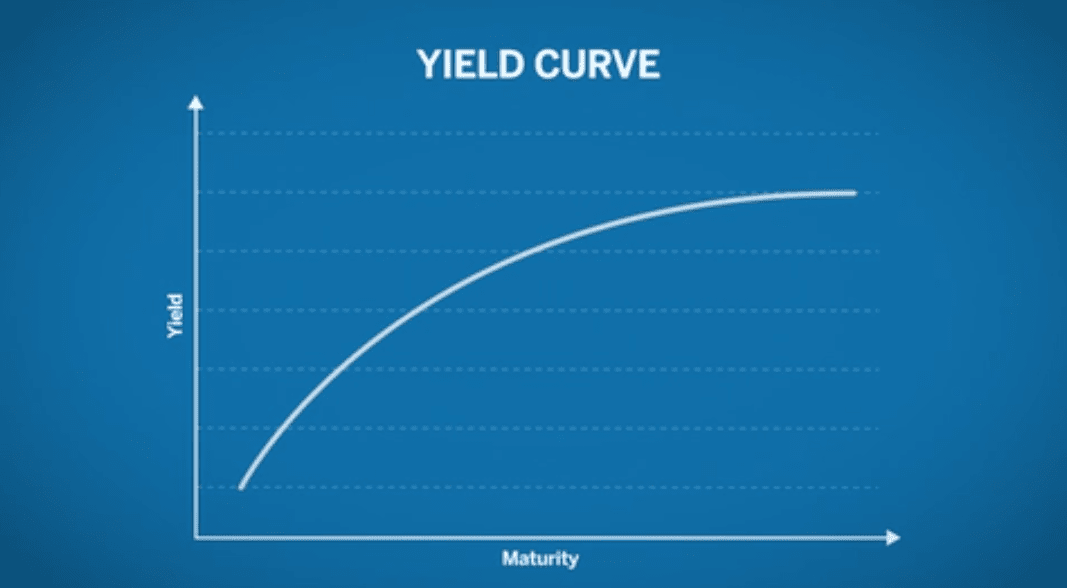
A yield curve plots what the same issuer pays across maturities. For currency purposes, two points matter.
The front end, typically the two year, prices what the market expects the central bank to do. It is the cleanest read on rate expectations.
The long end, typically the ten year, prices growth, inflation expectations and the compensation investors demand for holding duration. Policy influences it, but so do fiscal conditions and confidence in the issuer.
An inverted curve, where short yields exceed long ones, has historically preceded recessions, which is why it draws attention.
The Two Year Differential Is the Practical Tool
For a currency pair, the spread between two countries’ two year yields is usually a better guide than their policy rate difference.
The reason is that policy rates tell you where central banks are. Two year yields tell you where the market thinks they are going, and currencies trade expectations rather than the present.
A central bank can hold rates unchanged while the two year yield moves significantly, because the market has repriced the path. The currency follows the repricing, not the unchanged headline. That is why pairs move on decisions where nothing changed.
Watch the differential rather than either yield alone.
Rising Yields Are Not Always Currency Positive
This is the part worth understanding properly.
When the front end rises because a central bank is expected to tighten into a resilient economy, that generally supports the currency. Higher expected returns, stronger fundamentals.
When the long end rises while the currency weakens, something else is happening. That is the signature of investors demanding more compensation to hold a country’s debt, driven by fiscal concern, inflation risk or lost confidence in policy.
That combination appeared during the 2025 tariff episode, where the dollar depreciated strongly while Treasury yields rose, the inverse of typical risk-off behaviour. Traders reasoning that higher yields meant a stronger dollar were positioned exactly wrong.
So the question to ask is not whether yields rose. It is which end rose, and whether the currency agreed.
Four States Worth Recognizing
Bull steepening, where short yields fall faster than long. Rate cuts being priced, usually currency negative.
Bear flattening, where short yields rise faster than long. Tightening expectations, usually currency positive.
Bull flattening, where long yields fall faster than short. Growth concern.
Bear steepening, where long yields rise faster than short. Inflation or fiscal risk premium, and the state most likely to accompany a weakening currency despite the higher yield.
Using It
Check the two year spread for your pair before forming a directional view.
When a central bank surprises, watch whether the front end repriced or only the long end. A front end move has more staying power.
And when yields and the currency disagree, treat that as information rather than an anomaly to trade against.
Conclusion – Understanding the Yield Curve for Forex Traders
Understanding the yield curve for forex traders reduces to one habit. Look at which part of the curve moved before deciding what a rate story means for a currency. Front end moves are about policy. Long end moves can be about confidence, and those two point in different directions more often than most traders expect.
FAQ – Understanding the Yield Curve for Forex Traders
1. Which yield should I watch for currency trading?
The two year, and specifically the differential between the two countries in your pair. It prices expected policy rather than current policy.
2. Why did a currency fall when its yields rose?
Usually a long end move driven by fiscal or inflation risk rather than a policy driven front end move. Investors demanding more compensation is not the same as a stronger economy.
3. Does an inverted curve mean a currency will weaken?
Not directly. Inversion signals recession risk historically, but the currency reaction depends on how central bank expectations shift alongside it.
We have helped thousands of traders reach funding at TTT Markets from account sizes of $5k upwards to $500k. Check out our programs.
Additional resources:
Yield Curve in Forex: Strategies & Trading Insights | Blueberry
Yield Curve Explained: A Forex Trader’s Guide to Capital | FXNX

 support@tttmarkets.com
  WhatsApp Support →


