Trend Following vs Mean Reversion in Prop Firm Accounts
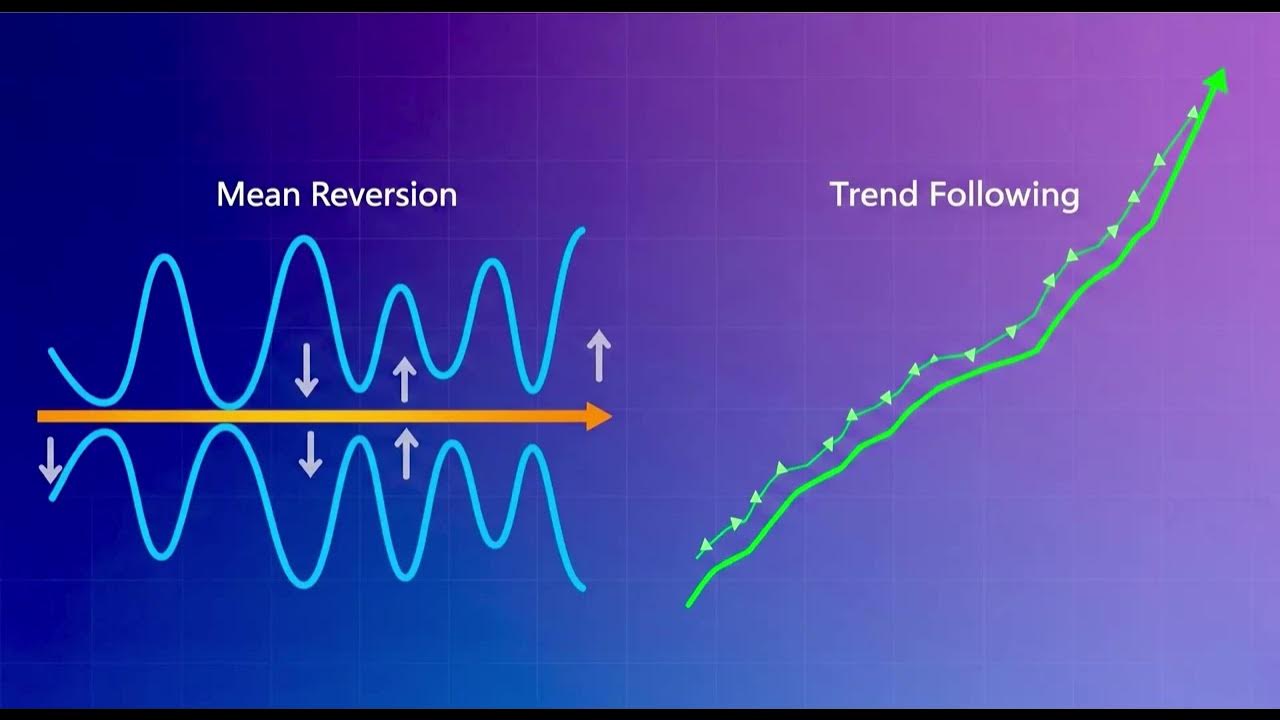
Trend following and mean reversion both produce positive expectancy, but they get there in opposite ways that interact with a funded account very differently. The question of trend following vs mean reversion in prop firm accounts isn’t about which is better in the abstract. It’s about how each one’s shape collides with a profit target, a drawdown limit, and an evaluation window.
Two Expectancy Profiles, Two Different Problems
Trend following makes its money from a small number of large winners that outweigh frequent small losses. Mean reversion makes its money from frequent small winners with the occasional larger loss when the reversion fails and price keeps going. These profiles hit prop constraints differently. A trend follower needs enough favorable trend periods inside the window to produce its rare big winners. A mean reversion trader needs the market to stay ranging long enough to avoid the larger losses that show up when a trend takes hold. Same evaluation, two different things that must go right.
The Drawdown Character Is Different, So Is the Response
Trend following bleeds during extended choppy markets, small loss after small loss on false starts with no winner to offset them. Those drawdowns run long and are hard to hold through with a fixed drawdown limit sitting right there. Mean reversion bleeds during strong trends, when several reversion attempts fail in a row as price extends away from the mean. The drawdowns look different and demand different responses. The trend follower has to tolerate a slow grind. The mean reversion trader has to cut a fast-extending loss before it eats the buffer.
Hold Time and Sample Size
Trend following often requires holding across sessions or days to capture the full move. Mean reversion usually exits quickly once price snaps back, producing short hold times. On firms with a minimum hold rule, the mean reversion trader has to confirm those fast exits don’t violate it. On firms without time or maximum hold limits, the trend follower can hold until the move completes. TTT Markets’ no time limit and absence of a maximum hold rule specifically helps trend followers who need to hold across sessions.
Sample size cuts the other way. A trend follower might complete only fifteen to twenty trades in a thirty to sixty day window, because it waits for real trends. That’s a small sample with high variance, and the result mostly reflects whether the window happened to contain strong trends, not whether the edge is real. Mean reversion produces more trades in the same window, a larger sample, and less variance distortion on the result.
Conclusion – Trend Following vs Mean Reversion in Prop Firm Accounts
The two approaches also punish different psychologies. Trend following forces you to hold through visible open drawdown while waiting for the move to extend, brutal when the drawdown has a hard limit attached. Mean reversion feeds you frequent small wins but demands you cut the occasional big loss fast before it runs. The real question in trend following vs mean reversion in prop firm accounts isn’t which is superior. It’s which discomfort you handle better, because you’ll be sitting in one of them constantly.
FAQ – Trend Following vs Mean Reversion in Prop Firm Accounts
1. Which approach has a better shot at passing an evaluation?
Mean reversion usually produces a larger sample in the window, which lowers variance and makes the result more about edge than luck. Trend following can pass faster if a strong trend shows up, but it’s more at the mercy of whether the window cooperates.
2. Why is trend following harder to hold psychologically in a funded account?
Because you sit in a visible open drawdown waiting for the move to extend, with a hard limit right there on the screen. The strategy is profitable over time but demands you tolerate discomfort the account structure makes impossible to ignore.
3. Does mean reversion’s frequent wins make it the safer choice?
Not safer, just differently risky. The frequent wins feel reassuring, but the occasional failed reversion during a trend can extend into a large loss fast. Safety comes from cutting that loss on time, not the win frequency.
We have helped thousands of traders reach funding at TTT Markets from account sizes of $5k upwards to $500k. Check out our programs.
Additional resources:
Why Two Strategies Are Better Than One: Trend-Following + Mean-Reversion

 support@tttmarkets.com
  WhatsApp Support →


