How to Open a Demo Trading Account and Practice Risk Free
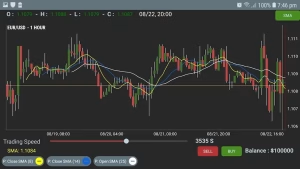
A demo account is a simulated trading environment funded with virtual money. It runs on the same platform as a live account, covers the same instruments, and lets you practice strategy and platform mechanics without putting real capital at risk. That’s the entire point of it.
It’s worth being clear about what a demo account is not. It’s not a test of whether trading will work for you. It’s a practice environment for building the skills and habits that live trading requires. Treat it accordingly.
Choosing the Right Platform Before You Open Anything
The demo account you open should be on the same platform you plan to use for live trading. Practicing on one platform and then trading live on another means starting the learning curve twice. Platform familiarity is a real skill, and it transfers directly.
For traders planning to trade CFDs or move toward any kind of structured trading environment, MT5 is the most widely used platform across brokers and prop firms. TTT Markets offers a free MT5 demo that opens within seconds, requires no deposit, and gives you access to the full instrument range including forex, indices, gold, commodities, and crypto. It’s a practical starting point if you’re not already committed to a specific broker.
How to Open a Demo Account
The process is straightforward. Choose a broker or platform that offers the demo environment you want. Go to their website and look for the demo account registration option, usually separate from the live account sign-up. You’ll need an email address and basic details. That’s typically it.
When you set up the account, choose a starting balance that reflects realistic live trading capital rather than an inflated virtual amount. Practicing with $100,000 in virtual funds when you plan to start live trading with $1,000 creates habits that don’t transfer. Keep it proportional.
Once registered, download the platform or access it through the browser version if available, log in with the credentials sent to your email, and place a trade. Don’t overthink the first one. The goal at this stage is just to learn how orders work and where things are on the platform.
How to Practice on a Demo Account and Actually Learn Something
Use position sizes relative to your demo balance that match what you’d actually use on a live account. If you’re planning to risk 1% per trade live, risk 1% per trade on demo. Oversizing on demo builds habits that will cause real damage when you switch to live.
Keep a trade journal from the start. Write down why you entered each trade, what happened, and what you’d do differently. This sounds tedious. It is the difference between practicing and just clicking buttons.
Don’t reset the account when it goes into drawdown. Drawdown management is one of the most important skills in trading. Resetting every time you lose teaches you to avoid losses rather than manage them. That’s the wrong lesson.
What Demo Trading Doesn’t Prepare You For
The psychological pressure of real money is something you cannot replicate on a demo account. Decisions that feel straightforward when the capital is virtual often feel different when the loss is real. That’s not a failure of demo trading. It’s just an honest limitation of the format.
Execution and spreads on demo accounts are also sometimes cleaner than live conditions. When you go live, expect a period of adjustment. Performance on demo does not transfer directly. Process does.
Conclusion – How to Open a Demo Trading Account and Practice Risk Free
Knowing how to open a demo trading account and practice risk free is a useful starting point, but the value comes from how you use it. Treat the demo account as seriously as a live one, practice with realistic position sizes, and don’t skip the trade journal. The habits you build now are the ones you’ll trade with when it matters.
FAQ – How to Open a Demo Trading Account and Practice Risk Free
1. How long should I use a demo account before going live?
Until your process is consistent across different market conditions, not just when things are going well. There’s no set timeline. If you’re still changing your strategy every week, you’re not ready. Consistency of approach matters more than a number of days or trades.
2. Do demo accounts expire?
Some do, some don’t. MT5 demos through most brokers including TTT Markets don’t expire. Always check before you start practicing somewhere with a hidden clock running, because losing access mid-progress is genuinely frustrating.
3. Is demo trading a good predictor of live trading results?
For process and strategy mechanics, yes. For predicting how you’ll handle the emotional side of live trading, no. Expect your live performance to differ from the demo, particularly in the first few weeks. That adjustment is normal and planning for it is more useful than being surprised by it.
We have helped thousands of traders reach funding at TTT Markets from account sizes of $5k upwards to $500k. Check out our programs.
Additional resources:
Demo Trading Account – Practice Forex & Stock Trading Risk-Free
Maximize Your Trading Skills with Demo Accounts: Features & Tricks

 support@tttmarkets.com
 WhatsApp Support →